

“Du hard rock aux skinheads- Dix ans d’une vie à l’envers 1983-1993” Frédérique Pineau Ginkgo Editeur, 2022
ENGLISH VERSION BELOW (written in red)

Libro in cui mi imbatto assolutamente per caso mentre, a Parigi, mi rifugio alla FNAC durante un acquazzone imprevisto (sì: in Francia c’è ancora la FNAC, che vende i libri sugli skinheads… meditiamo). Anche successivamente, quando ho cercato informazioni su internet, non ho trovato nessuna recensione; forse perchè il libro è molto recente (pubblicato ad ottobre), forse perchè è uscito solo in francese, però per ora sembra passato sotto silenzio.
Frédéric Pineau è nient’altro che Fred “Fantomas”, della storica fanzine omonima, anche primo batterista degli Herberts (storico combo francese in cui militava anche il noto disegnatore Alteau) quando ancora all’epoca si chiamavano Gavroches, e tra i fondatori dei Jussieu Skins, raggruppamento skinhead original parigino attivo agli inizi degli anni ’90 (ma fino almeno a qualche anno fa nella zona di Jussieu si ritrovavano ancora crew skin e punk).
Il libro (scorrevole anche per chi, come me, non è proprio un mostro col francese) è un’autobiografia della militanza skinhead dell’autore (che oggi fa lo storico, con anche all’attivo diverse pubblicazioni) e della scena parigina dalla metà degli anni ’80 al decennio successivo, quando poi, dopo l’ennesima rissa (“finita particolarmente male”), Fred si allontanerà dalla scena skin, vendendo tutti i dischi e (gravissimo per uno storico!) buttando via tutto il resto.
La sua fase hard rock dura fortunatamente pochissimo (fino al 1985), mentre la descrizione della scena skinhead occupa praticamente l’intero libro, ed è davvero interessante.
L’autore inizia ad interessarsi al culto skinhead sia tramite la scena che lui definisce “rock alternativo francese” (Berurier Noir, Ludwig von 88 ecc), sia con i primi avvicinamenti alle prime bande skinhead della capitale francese (i nuclei degli skins di Les Halles– i primissimi skins francesi, poi quasi tutti distrutti dalla droga-, Bonsergent– gli Swingo Porkies-, Gambetta e Tolbiac; i nuclei skinhead parigini prendevano il nome dai quartieri dove si incontravano i vari gruppi, anche se spesso i membri vivevano altrove), ed inoltre con i primi pellegrinaggi a Londra (tappa fondamentale per tutti i giovani europei, è lo stesso passo che si ritrova anche nei libri degli omologhi italiani, da Philopat e Pedrini in poi).
Molto interessante la descrizione che viene fatta (essendo l’autore molto vicino ad alcune di queste bande) della scena francese della metà degli anni ’80, in particolare della scena redskin e dei famosi “chasseures de skins”. Molti si ricorderanno del documentario “Antifa, chasseures de skins” uscito qualche anno fa (cazzo, noto solo ora che è del 2008, altro che qualche anno fa! Come vola il tempo) che fu proiettato in un sacco di centri sociali e a diversi concerti e serate.

Beh, anche se era abbastanza chiaro a chi non lo guardasse solo con gli occhi dell’ideologia, questo libro conferma che la scena redskin francese aveva in realtà pochissimo in comune con gli skinhead propriamente detti. Secondo il nostro, la scena oi francese “autentica” era finita intorno al 1984, prima del suo passaggio allo stile skinhead, a causa della violenza e della politicizzazione estrema.
Le gang degli “chasseures de skins” (Ducky Boys, i principali, e poi Red Falcons, Red Warriors, Red Brains ecc, oltre a bande su base etnica, come i Black Dragons) ascoltavano più o meno di tutto, i Ducky Boys erano in fissa col rockabilly e, soprattutto a fine anni ’80, andava molto anche il rap americano. Anche l’abbigliamento era molto debitore agli anni 50-60, e caratteristico l’uso delle bandane (rosse o nere), veri e propri “colori” del gruppo. Da notare che esistevano anche bande femminili, come ad esempio le Pink Ladies (interessante il fatto che i Ducky Boys avevano preso il nome da una gang del film “The Wanderers”, mentre Pink Ladies veniva da “Grease”) o le Red Flys dalla banlieue sud della città.
Dall’altra parte della barricata erano diversi i nuclei di skinhead nazionalisti o apertamente fascisti, con alcune sorprese, ad esempio un paio di camerunensi, neri, nel gruppo “Junker Europa” (senza contare gli arabi e persiani del giro Batskins).
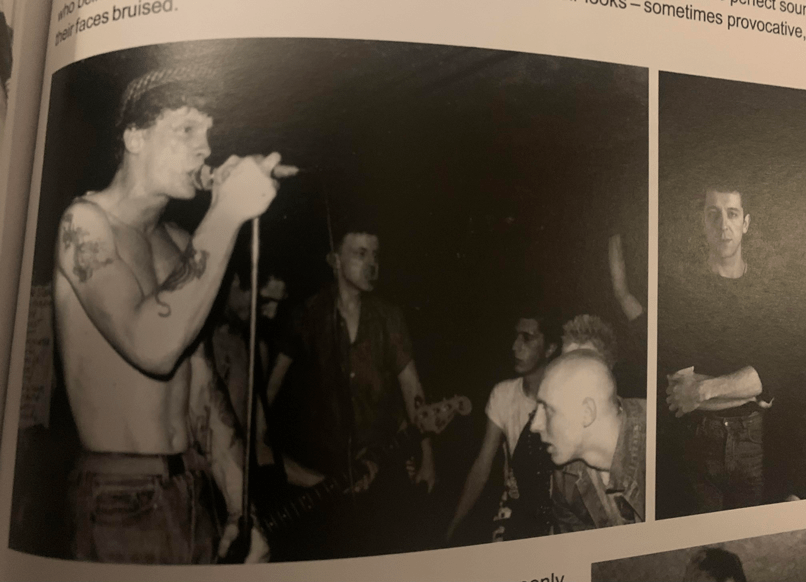

Per un paio di anni, a Parigi continuano a fronteggiarsi le due fazioni, con spedizioni come a Pigalle dove redskins e chasseures de skins letteralmente “massacrano tutti quelli considerati skinhead o che gli somigliavano in qualche modo, senza alcuna distinzione”; la situazione, la “legge del taglione” come la chiama l’autore, diventa insostenibile, finchè nel 1989 lo scioglimento dei Berurier Noir (con le famose tre serate di concerti all’Olympia di Parigi) rappresenta il canto del cigno della scena redskin), una nuova ondata ska con gruppi e fanzine da Europa e UK e dalla stessa Francia, e la contemporanea nascita a Parigi del primo nucleo SHARP di Parmentier aprono uno spiraglio per una scena skinhead tradizionale.
Dalle ceneri della fanzine “Forces redskins” nasce “Fantomas” e il nostro racconta come una serata ska original e mod gli cambia, ancora una volta, la vita, portandolo verso binari di rifiuto della politica e con la costituzione del gruppo dei Jussieu Skins, nucleo di skins tradizionali che rifiutavano in toto la politica.

Un libro davvero interessante per comprendere la storia dello stile skinhead a Parigi (del resto della Francia si parla ben poco) e le sue varie evoluzioni. Nonostante venga presentato un unico punto di vista, il fatto che l’autore sia uscito dal giro dovrebbe porlo al riparo dall’essere di parte o dal perseguire interessi personali. E’ anche vero che, basandosi solo su ricordi personali e qualche foto, a volte il racconto tende a ingarbugliarsi e, con qualche salto avanti e indietro temporalmente, occorre fare attenzione a non perdere il filo.
Sarebbe stata anche utile una qualche galleria fotografica, mentre ci sono solo alcune (molto poche!) copertine di fanzine d’epoca.
ENGLISH VERSION
A book that I come across absolutely by chance while, in Paris, I take refuge at the FNAC during an unexpected thunderstorm (yes: in France there is still the FNAC, and sells books about skinheads … let’s meditate). Even later, when I searched on internet for information, I couldn’t find any reviews; perhaps because the book is very new(published in October), perhaps because it was released only in French, but for now it seems to have been passed over in silence.
Frédéric Pineau is Fred “Fantomas”, from the old fanzine of the same title, also the first drummer of the Herberts (historic French combo in which the well-known designer Alteau also played) when they were still called Gavroches at the time, and one of the founders of the Jussieu Skins, a skinhead original Parisian group active in the early 90s (but until at least a few years ago in the Jussieu area you could still find skin and punk crews).
The book (easy to read even for people like me who aren’t exactly a monster with french) is an autobiography of the skinhead past of the author (who today is an historian, with several publications to his credit) and of the Parisian scene from the middle from the 80s to the following decade, when then, after the umpteenth fight (“which ended reallybadly”), Fred will move away from the skin scene, selling all the records and (very bad for an historian!) throwing away everything else.
His hard rock phase fortunately lasts very little (until 1985), while the description of the skinhead scene takes up practically the entire book, and it’s really interesting.
The author begins to take an interest in the skinhead cult both through the scene that he defines as “French alternative rock” (Berurier Noir, Ludwig von 88 etc.), and with the first approaches to the first skinhead bands of the French capital (the nucleus of the skins of Les Halles- the very first French skins, then almost all destroyed by drugs-, Bonsergent- the Swingo Porkies-, Gambetta and Tolbiac; the Parisian skinhead nuclei took their name from the neighborhoods where the various groups met, even if the members often lived elsewhere) , and also with the first pilgrimages to London (a fundamental stage for all young Europeans, it is the same passage that is also found in the books of the Italian counterparts, for example Philopat and Pedrini).
The description that is made (the author was very close to some of these gangs) of the French scene of the mid-80s is very interesting, mostly the redskin scene and the famous “chasseures de skins”. Many will remember the documentary “Antifa, chasseures de skins” released a few years ago (bloody hell, I just read hat it was from 2008, not a few years ago! How time flies) which was screened in a lot of squats and during various gigs.
Well, even if it was quite clear to those who didn’t look at it only with the eyes of ideology, this book confirms that the French redskin scene actually had very little in common with the skinheads proper. According to ours, the “authentic” French oi scene had ended around 1984, before its transition to the skinhead style, due to violence and extreme politicization.
The gangs of the “chasseures de skins” (Ducky Boys, the main ones, and then Red Falcons, Red Warriors, Red Brains etc, as well as ethnic gangs, such as the Black Dragons) listened to more or less every kind of music, the Ducky Boys were obsessed with rockabilly and, especially at the end of the 80s, American rap was also very popular.
Even clothing was very much indebted to the 50s and 60s, and was caracteristic the use of bandanas (red or black), the real “colours” of the group. It should be noted that there were also female gangs, such as for example the Pink Ladies (interesting that the Ducky Boys had taken their name from a gang from the movie “The Wanderers”, while Pink Ladies came from “Grease”) or the Red Flys, from southern banlieue of the city.
On the other side of the fence there were several nuclei of nationalist or openly fascist skinheads, with some surprises, for example a couple of Cameroonians, blacks, in the “Junker Europe” group (not counting the Arabs and Persians of the Batskins group).
For a couple of years, the two factions continued to face each other in Paris, with expeditions such as to Pigalle where redskins and chasseures de skins literally “massacred all those considered skinheads or who resembled them in some way, without any distinction”; the situation, the “law of retaliation” as the author calls it, becomes unsustainable, until in 1989 the dissolution of Berurier Noir (with the famous three evenings of concerts at the Olympia in Paris) represents the swan song of the redskin scene) , a new ska wave with groups and fanzines from Europe and the UK and from France itself, and the simultaneous birth in Paris of the first SHARP nucleus of Parmentier open a window for a traditional skinhead scene.
From the ashes of the fanzine “Forces redskins” was born “Fantomas” and our friend tells us how an original ska and mod evening changes his life once again, leading him towards the paths of refusal of politics and with the establishment of the Jussieu Skins group, a nucleus of traditional skins that totally rejected politics.
A really interesting book to understand the history of the skinhead style in Paris (very little is said about the rest of France) and its various evolutions. Although only one point of view is presented, the author’s departure from the loop should protect him from being biased or pursuing self-interest. It is also true that, relying only on personal memories and a few photos, sometimes the story tends to get tangled and, with some leaps back and forth in time, one must be careful not to lose the thread.
A few photo galleries would also have been useful, while there are only a few vintage fanzine covers.
 Oi! Senza pietà